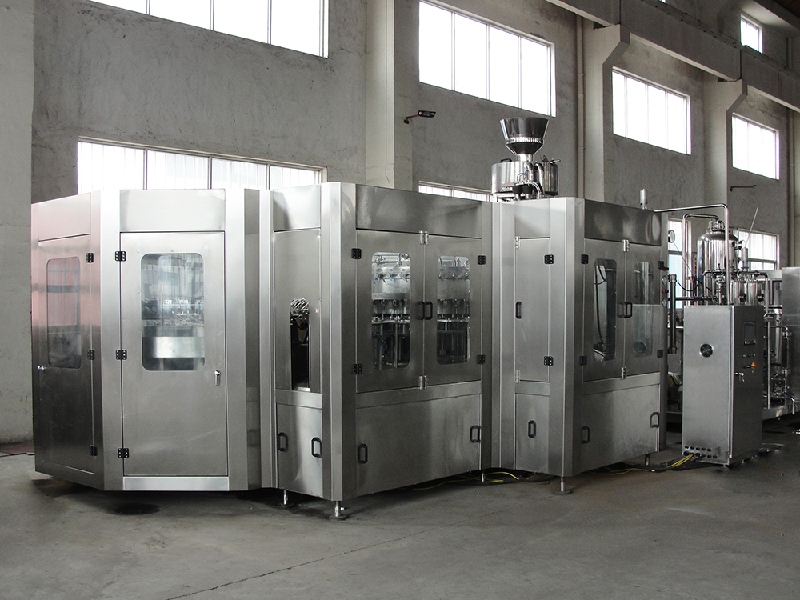
The One Difference That Matters: Keeping the Gas In
A carbonated drink filling line looks a lot like a still water line, until you get to the filler. The difference is CO2. Soda, cola and sparkling water all carry dissolved gas, and that gas has to survive the trip from the mixer to the sealed cap. If it escapes, the drink goes flat and the bottle is wasted. That is why a carbonated line uses different equipment at nearly every stage.
Stage 1: Water Treatment and Deaeration
Like any beverage line, the process starts with water treatment. The water is filtered and purified to drinking standard. Then comes a step most water plants skip: deaeration. Dissolved oxygen is removed before carbonation, because oxygen competes with CO2 and shortens shelf life.
Stage 2: Syrup Mixing
The drink starts as a blend of treated water, syrup and additives. A syrup mixing system prepares this base in the right ratio, and in most plants the mix is then chilled. Cold liquid absorbs CO2 far better than warm liquid, so temperature control starts here.
Stage 3: Carbonation
The chilled mix passes through a carbonation system, where CO2 gas is dissolved into the liquid under pressure. The carbonation mixer sets the gas volume your recipe needs. From here, the drink is fully carbonated and must stay under pressure until it is sealed in the bottle.
Stage 4: Bottle Blowing (Optional)
Many carbonated lines make their own PET bottles with a blow molding machine, just like water lines. Some plants also use glass bottles. Either way, the bottles arrive at the filler clean and ready.
Stage 5: Isobaric Filling (the Core)
This is where the carbonated line differs most from a water line. A water filler uses gravity. A carbonated filling machine uses isobaric, or counter-pressure, filling. Here is how it works:
- The bottle is rinsed, then sealed against the filling valve.
- CO2 gas is charged into the bottle until the pressure matches the pressure in the tank.
- With pressure equal on both sides, the drink flows in gently with almost no foaming.
- The bottle is de-pressurized and moves to capping.
Because the bottle is pre-pressurized, the drink does not foam and the CO2 stays dissolved. Good isobaric filling keeps CO2 loss below 0.5 g/L, which protects both the fizz and your cost per bottle.
Stage 6: Capping and Inspection
A servo capper applies the cap quickly and with controlled torque, right after filling, so the gas has no time to escape. Cap detectors reject missing or skewed caps before the bottle moves on.
Stage 7: Warming, Labeling and Packing
Cold-filled carbonated drinks often pass through a bottle warming machine to stop condensation on the label. Then the bottles are labeled, bundled into packs by a shrink wrapper or case packer, and palletized for shipping.
Why Isobaric Filling Matters
The counter-pressure method is not a luxury, it is the difference between a drink that stays fizzy and one that goes flat. Open or gravity fillers lose CO2 in foam and vapor. Isobaric filling keeps the gas where it belongs, which means consistent fizz, less product loss and a lower cost per bottle.
Frequently Asked Questions
What is the difference between a carbonated and still-water filling line?
A carbonated line adds deaeration, a carbonation mixer and an isobaric filler so the CO2 stays in the product. Still water lines use gravity or negative-pressure filling.
What drinks can a carbonated filling line handle?
Cola, soda water, sparkling water, carbonated juice and low-pulp energy drinks, typically in PET bottles from 250ml to 2L.
How much CO2 is lost during isobaric filling?
With proper counter-pressure filling, CO2 loss stays below 0.5 g/L, far lower than open filling methods.
Do you supply the complete carbonated line?
Yes. JNDTECH supplies water treatment, syrup mixing, carbonation, isobaric filling, labeling and packing as one turnkey line, with installation and training included.
Plan Your Carbonated Drink Line
JNDTECH designs and builds carbonated drink filling lines from 2,000 to 36,000 BPH, with layout design, bottle and mold development, installation and training all included. Contact JNDTECH for a free layout drawing and quotation.