Why Sachet Water Is a Giant Business in Africa
Spend a day in Lagos, Accra or Kano and you will see it everywhere: small sealed bags of drinking water sold on the street for the price of a few coins. In Nigeria people call it "pure water". Regulators there report that the country consumes about 6.84 million litres of sachet water every day, more than 2.5 billion litres a year, produced by over 32,000 manufacturers. This is not a niche. It is one of the largest drinking water markets on the continent, and it runs on one machine: the sachet water machine.


Why the Pouch Format Fits African Markets
The sachet wins on cost and access. A pouch uses a short strip of thin food-grade film. There is no bottle, no cap and no label, so the pack costs a fraction of a PET bottle and weighs far less to move. Where piped water is unreliable and household budgets are tight, that lower pack cost is what lets a producer sell a single serving at a price people can pay every day. The same logic is driving the sachet water business in Ghana and across fast-growing markets in West and East Africa.
What a Sachet Water Filling Machine Does
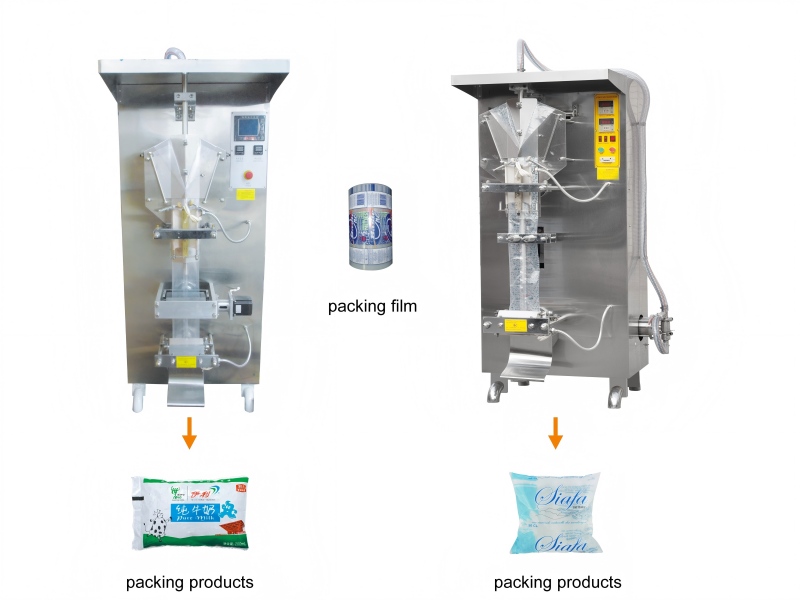
A sachet water filling machine is built around a vertical form-fill-seal (VFFS) unit. It pulls film from a roll, forms the film into a tube, fills a measured volume of treated water, then seals and cuts each pouch in one continuous pass. The cycle repeats many times a minute. From a single roll of film you get finished, sealed, ready-to-sell pouches.
Most lines add a few useful extras: a date coder for batch and expiry, a hole punch if the pouches hang on a display, and a counter or stacker for packing into bags. Multi-lane sachet water machines run several lanes side by side, so output grows without making each pouch bigger.
The Full Line Behind One Machine
The filling machine is the centre, but a working factory is more than that. A typical sachet water line runs in this order:
- Water source and storage. A borehole or treated supply feeding a storage tank.
- Water treatment. Multi-media and carbon filtration, reverse osmosis, then UV or ozone sterilisation.
- Sachet water filling machine. One or more lanes, with date printer and cutter.
- Packing. Counting, stacking and bagging for distribution.
Water treatment is not optional. Sachet water is sold as drinking water, and the whole product is judged on whether it is clean and safe. If you are new to the format, our guide to how bagged water is filled, sealed and sold covers the basics.
The Rules You Cannot Skip: NAFDAC and Ghana FDA
In Nigeria, no packaged water can be legally produced or sold without a Packaged Water Registration Certificate from NAFDAC, the food and drug regulator. The NAFDAC registration number has to appear on every sachet. Before approval, inspectors check the facility, the water source, the treatment system and the labelling against Good Manufacturing Practice rules. Producers who skip this step risk fines, seizure and closure.
In Ghana, sachet water is regulated by the Food and Drugs Authority under the Public Health Act. In early 2026 the authority added heavy-metal testing, including lead, as a routine requirement for potable water. That means every registered producer now goes through extra laboratory checks. The lesson is simple: plan the water treatment stage and buy equipment that can meet inspection standards from day one, because getting the registration is what makes the business legal and keeps customers trusting the brand.
What to Check Before You Buy a Sachet Water Machine
Not all pouch filling machines are equal. A water pouch filling machine that fails inspection costs more than it saves, so when you compare suppliers, look past the headline price:
- Output. Machines are rated in pouches per hour, not bottles per hour. Match this to the bags you want to sell per day.
- Lane count. A single lane is a low-cost start. Multiple lanes raise output without a second operator.
- Fill accuracy and seal stability. A weak seal leaks in the crate and looks cheap on the shelf. Stable sealing temperature and correct film thickness matter more than a fast cycle.
- Film compatibility. Confirm the machine runs the food-grade LDPE film commonly available in your market.
- Water treatment match. The filler should be sized to the treatment system, not bolted on after.
- After-sales. Installation, operator training, spare parts and a clear warranty decide whether the line keeps running.
Sizing the Line to Your Stage
| Stage | Typical setup | What it suits |
|---|---|---|
| Starter | Single-lane sachet water machine with basic filtration | First factory, local distribution, testing the market |
| Growing | Multi-lane machine with full treatment line | Established sales, several delivery routes |
| Full factory | High-output multi-lane line with automated packing | Regional supply, contract buyers, own brand |
Tell a supplier your target output and sachet size, and they can size the lane count and filling heads to match.
Frequently Asked Questions
How much does a sachet water machine cost?
Price depends on output, lane count and how much of the line you buy at once. A single-lane machine with basic treatment costs far less than a full multi-lane factory line. Send your target output for a real quotation rather than comparing headline prices.
Do I need a water treatment system?
Yes. Sachet water is drinking water, so it has to be treated and it has to pass inspection. Filtration plus reverse osmosis, finished with UV or ozone, is the usual setup ahead of the filling machine.
Is the sachet water business legal for a new producer?
Yes, if you register. In Nigeria you need a NAFDAC Packaged Water Registration Certificate; in Ghana you register with the Food and Drugs Authority. Both require a compliant facility, a safe water source and lab testing.
Can one machine produce different sachet sizes?
Within a range, yes. Changing size means changing the forming collar and seal settings, and often the fill volume. Check the size range before you buy if you plan to sell more than one pack format.
Start Your Sachet Water Line with JNDTECH
JNDTECH builds sachet water filling machines and complete pouch water lines, from water treatment through filling, sealing and packing. We size the machine to your target output, match the treatment stage to your water source, and support you through installation and operator training. Every line ships with a 1-year warranty and 24-hour after-sales support, and our systems are built to meet ISO 9001 and CE standards. Contact JNDTECH with your sachet size and target output for a free quotation and layout drawing.