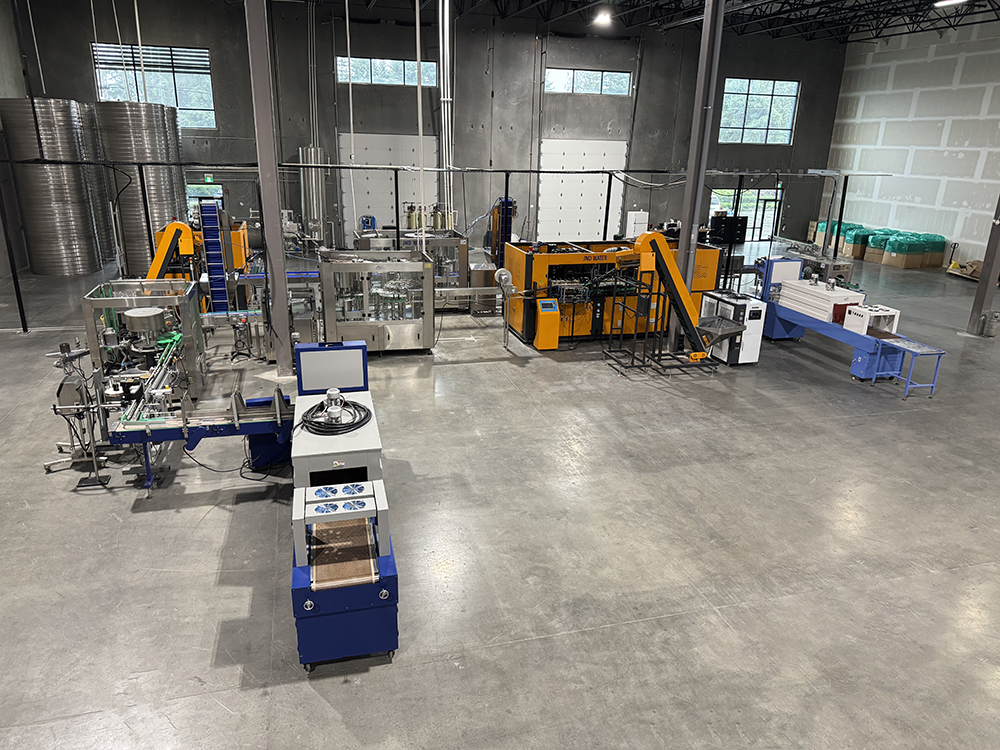
Buying a complete water bottling plant is one of the biggest commitments in the beverage business. Get the capacity, bottle type, and supplier right, and you have a cash-generating asset for a decade. Get them wrong, and you inherit a line that bottlenecks, leaks warranty disputes, and never reaches payback.
This guide is written for first-time and expanding investors who need a turnkey water bottling plant they can actually run — not a brochure. It covers every section of a real line, how to size capacity, PET vs glass vs 5-gallon, a sample layout, a cost model, and a supplier checklist. It draws on 17+ years of building lines for 450+ factories across 125+ countries at JNDTECH.
1. What Is a Complete Water Bottling Plant?
A complete water bottling plant (also called a bottled water production line or water bottling line) is an integrated system that converts raw water into sealed, labeled, shrink-wrapped bottles ready for distribution. "Complete" means every process step is included and pre-integrated by one supplier, so the line arrives commissioning-ready rather than as loose machines you must wire together yourself.
A standard PET water bottle manufacturing plant flows in this order:
- Water treatment — filters, RO/UF, disinfection → potable-grade water
- Bottle making — blow molding (or preform feeding for purchased preforms)
- Filling & capping — monoblock rinses, fills, caps
- Labeling — sleeve, OPP, or sticker
- Packing — shrink wrap or carton
- Palletizing — robot or gantry stacker
Each stage is matched to the same BPH (bottles per hour) so the line balances. A mismatch — e.g. a 12,000 BPH filler fed by a 4,000 BPH blower — is the most common cause of "my line feels slow."
2. Turnkey vs Piece-by-Piece Sourcing
Before comparing machines, decide the procurement model. This single choice shapes your risk, timeline, and who answers the phone when something breaks.
| Factor | Turnkey (one supplier) | Piece-by-piece |
|---|---|---|
| Integration & wiring | Done by supplier, tested before shipment | You coordinate between brands |
| Commissioning time | Typically 2–4 weeks onsite | Often 1–3 months of trial/error |
| Warranty & support | One accountable partner | Split responsibility, finger-pointing risk |
| Upfront cost | Slightly higher (integration built in) | Lower sticker, higher hidden cost |
| Best for | First-time investors, fast launch | Experienced operators upgrading one stage |
3. The Core Sections of a Bottling Line
Below is what each section does and which JNDTECH module typically fills it. Use this as your equipment checklist.
3.1 Water Treatment System
Raw water (municipal, well, or spring) passes through multi-media filters, activated carbon, precision filtration, then reverse osmosis (RO) or ultrafiltration, and final ozone/UV disinfection. Output must meet your market's drinking standard.
Reverse Osmosis Pure Water Treatment Equipment →
3.2 Bottle Making — Blow Molding
For PET, a blow molding machine heats preforms and inflates them in mold cavities. You can also buy ready-made preforms and skip blowing (slower, less control). See the Water Bottle Blowing Machine.
3.3 Filling & Capping Monoblock
The heart of the plant. A monoblock rinses empty bottles, fills by gravity or volumetric method, and caps — all in one frame for hygiene and speed. Capacity here defines your BPH.
- Pure Mineral Water Bottle Filling Machine
- 3–15L Drinking Bottle Water Filling Machine
- 5L Water Filling Machine
3.4 Labeling
Sleeve (PVC/PET shrink), OPP hot-melt, or self-adhesive sticker — chosen by bottle shape, speed, and look. Up to 30,000 BPH available. Automatic Labeling Machine →
3.5 Packing & Palletizing
Shrink-wrap bundles bottles into packs; a palletizer stacks them for shipping. Both protect product and cut labor.
4. How to Choose Capacity (BPH)
Capacity is the single biggest cost and performance driver. Size it to your sales plan, not your ambition.
| Tier | BPH | Typical use | Automation |
|---|---|---|---|
| Small / startup | 2,000 | Local brand, single shift | Semi-auto possible |
| Growing regional | 4,000–6,000 | Multi-SKU, distribution | Fully automatic |
| Industrial | 10,000–24,000 | National / export | High-speed monoblock + blowing |
A small scale water bottling plant at 2,000 BPH is the most common entry point — lower capital, easier to staff, and enough to validate a market before scaling. Whatever tier you pick, add 20–30% headroom above your year-one forecast so you are not rebuilding the line in 18 months.
5. Bottle Type: PET vs Glass vs 5-Gallon
| Format | Best for | Speed | Notes |
|---|---|---|---|
| PET (0.2–2 L) | Retail, mass market | Fastest | Lowest cost/bottle; default choice |
| Glass | Premium / export | Slower | Fragile, higher filling care |
| 5-gallon (18.9 L) | Office / dispenser | Different loop | Refillable; see 5-Gallon Filling Machine |
Many operators run a 5 gallon water bottling line alongside PET — the 5-gallon loop uses dedicated rinsing and filling because bottles are refilled, not single-use. If your market uses dispensers (common in offices, schools, and Middle East/Asia), add 5-gallon capacity from day one rather than retrofitting later.
6. Sample Plant Layout & Workflow
A balanced bottling line layout keeps flow in a straight line to cut conveyor length and labor:
- Intake: raw water tank → treatment skid
- Blowing: preform loader → blow molder → air conveyor to filler
- Filling: rinser-filler-capper monoblock
- Labeling: sleeve/OPP/sticker applicator
- Packing: shrink wrapper → case packer
- Outbound: palletizer → stretch wrapper → warehouse
7. Investment & Cost Breakdown
There is no single water bottling plant cost — it scales with BPH and automation. Use this model to budget, then request a configuration quote.
| Cost component | Share of budget (typical) | What drives it |
|---|---|---|
| Filling monoblock | 30–40% | BPH, heads count |
| Water treatment | 10–15% | Source water quality |
| Blow molding | 12–20% | Integrated vs separate |
| Labeling + packing | 12–18% | Speed, label type |
| Conveyors, air, electrical | 8–12% | Line length |
| Install, training, spares | 5–10% | Distance, scope |
Rule of thumb: a small scale water bottling plant (2,000 BPH, semi/full auto) starts in the low six figures USD; a 12,000 BPH fully automatic line with blowing, labeling, and palletizing runs several times higher. Always get a quote tied to a written configuration — not averbal estimate.
8. How to Select a Turnkey Supplier
Your supplier is your long-term operating partner. Evaluate on these:
- Reference plants in your capacity tier and region — ask for contacts
- Certifications — CE, ISO9001, and material certificates for food contact
- Engineering depth — can they size BPH, not just quote a catalog number?
- Spare-parts policy — local stock or fast air shipment
- Training & commissioning — included onsite days, language support
- Layout drawing — do they provide a CAD layout before you pay?
JNDTECH has delivered 9,000+ machines to 450+ factories in 125+ countries since 2008, with ISO9001 and CE certification. See the company profile and our mineral water filling line reference.
9. Why Operators Choose JNDTECH
Beyond equipment, what protects your investment:
- Turnkey accountability — one partner from layout to commissioning
- Proven modules — every section above is a field-tested JNDTECH machine
- Global support — 125+ country footprint, multilingual service
- Scalable design — start at 2,000 BPH, expand without re-platforming
10. Frequently Asked Questions
What is a complete water bottling plant?
A complete water bottling plant is a full production system that takes raw water and turns it into sealed, labeled, packaged bottles ready for sale. It typically includes water treatment, bottle blowing, filling and capping, labeling, and packing/palletizing — delivered as one integrated, commissioning-ready line.
How much does a complete water bottling plant cost?
Cost depends mainly on capacity (BPH) and automation. A small semi-automatic 2,000 BPH PET line often starts in the low six figures USD, while a fully automatic 12,000 BPH line with blowing, labeling, and palletizing runs several times higher. Request a configuration-based quote rather than a fixed price.
What capacity (BPH) should I choose?
Match capacity to your sales plan and shift model. Common tiers: 2,000 BPH (startup), 4,000–6,000 BPH (regional), 10,000–24,000 BPH (industrial). Size for demand plus 20–30% headroom.
PET, glass, or 5-gallon — which should my plant use?
PET is default for 0.2–2 L retail (cheap, fast). Glass suits premium/export. 5-gallon serves dispenser markets via a separate refill loop. Many plants run PET and 5-gallon in parallel.
Turnkey or piece-by-piece — which is better?
Turnkey (one supplier delivers and integrates the whole line) reduces integration risk, shortens commissioning, and gives one accountable partner. Best for first-time investors.
11. Next Steps
You now have the full picture of a complete water bottling plant: the sections, the capacity math, the bottle decision, the layout, the cost model, and the supplier checklist. The fastest path from here:
- Confirm your target BPH and bottle format (PET / 5-gallon / both)
- Send us your source water type and daily volume goal
- We return a written configuration + layout drawing + quote
Get a turnkey water bottling plant quote tailored to your capacity.
Interested in This Solution?
Our engineers will prepare a tailored proposal and quotation for you.
Send Inquiry