1 / 3
Cup Filling and Sealing Machine | Roll Film | JNDTECH
Roll film cup filling and sealing machine from JNDTECH. Automatic cup feeding, film feeding, printing registration, filling, sealing and cutting for yogurt, jelly, jam and ice cream. Six models from 1,500 to 16,000 cups per hour, with cup rinsing optional.
Send InquiryProduct Description
Cup Filling and Sealing Machine with Roll Film
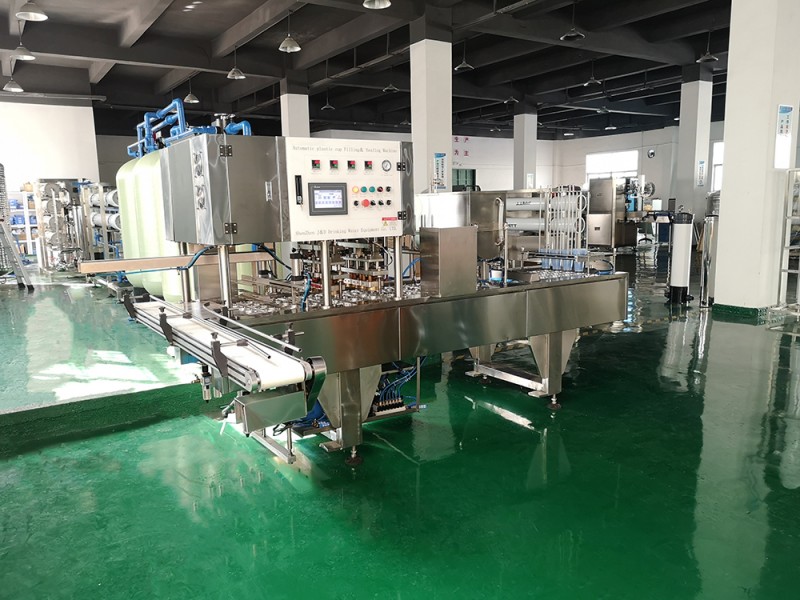
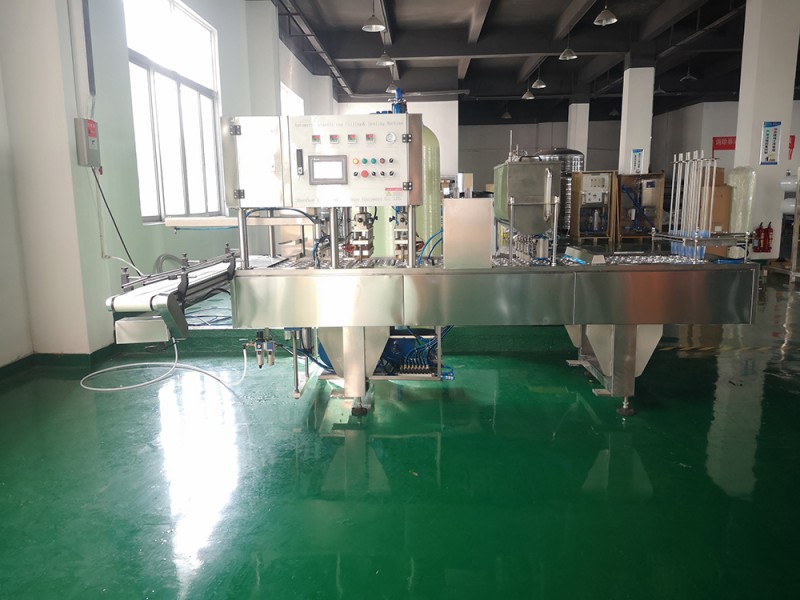
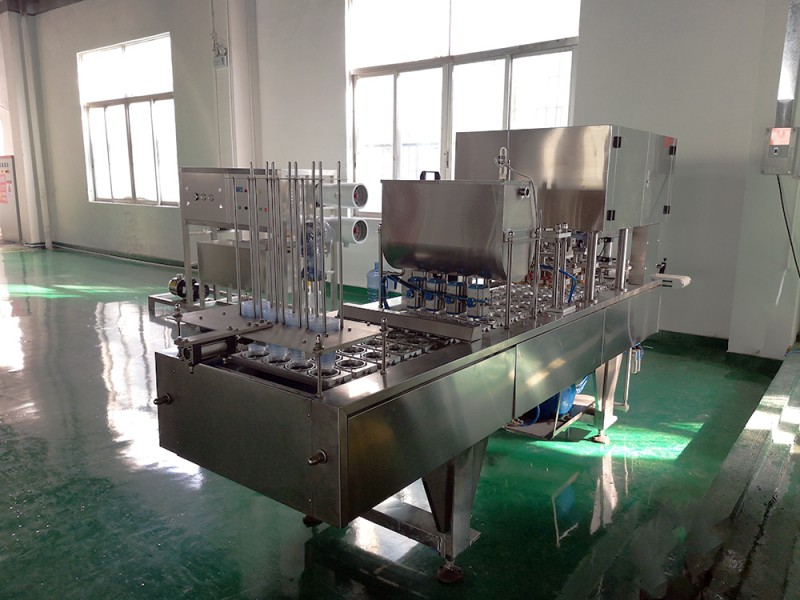
The JNDTECH JND series is a cup filling and sealing machine that feeds cups, lays roll film, fills and seals in one automatic cycle. Film feeding, printing position, filling, sealing and cutting all run under sensor control, so the printed film lands in the same place on every cup. Six models cover 1,500 to 16,000 cups per hour, from the JND-2C for a small dairy up to the JND-16C for a full production line. The machine handles liquids, cream, jelly, ice cream and fruit jam in PP cups and bowls, and cup rinsing is available as an option.
How the Roll Film Sequence Works
Each cup passes through the same six steps, and the operator only loads cups and film:
- Cup feeding. Cups drop from the magazine onto the conveyor, spaced by a sensor rather than a fixed mechanical stop.
- Film feeding. Roll film is drawn across the cup mouth and indexed forward one pitch at a time.
- Printing position. A sensor reads the registration mark on the printed film and aligns each design to the cup before sealing.
- Filling. The filling heads meter product into the cup. The number of heads sets the output, which is why the model series runs from 2C to 16C.
- Sealing and cutting. A heated die seals the film to the cup rim and cuts it free in the same stroke.
- Discharge. The sealed cup leaves the conveyor for the packing table.
Printing position is the step that decides whether the machine suits your product. A plain film tolerates misalignment. A film printed with a brand, a flavour mark or a lid design does not, and a machine without registration control will scatter the design across the cup.
Why Roll Film Instead of Aluminum Lids
Both formats seal the cup. They differ in film cost, branding and changeover.
| Item | Roll film | Aluminum lid |
|---|---|---|
| Printing | Printed on the reel, every cup identical | Pre-printed lids, bought per size |
| Film cost per cup | Lower on high volume | Higher, and priced per lid |
| Cup size change | Change film width and die | Change lid stock |
| Air pressure required | 0.6-0.85 Mpa | 0.65-0.85 Mpa |
Roll film suits a plant running one or two cup sizes at volume, where the film cost per cup and the printed branding matter more than changeover speed. Aluminum lids suit a plant that changes cup size often or sells into markets where a rigid lid is expected.
Technical Specifications
| Model | JND-2C | JND-4C | JND-6C | JND-8C | JND-10C | JND-16C |
|---|---|---|---|---|---|---|
| Power supply | 380V/50Hz | 380V/50HZ | 380V/50Hz | |||||
| Power (KW) | 2 | 3.2 | 5 | 6.5 | 8.2 | 12 |
| Productive ability (Cups/H) | 1500-2100 | 3000-4100 | 4500-6000 | 6500-7500 | 7000-10000 | 14000-16000 |
| Air pressure (Mpa) | 0.6-0.85 | 0.6-0.85 | 0.6-0.85 | 0.6-0.85 | 0.6-0.85 | 0.6-0.85 |
| Air consumption (M³/Min) | 0.6 | 0.7 | 0.8 | 0.8 | 0.9 | 1.0 |
| Total weight (Kg) | 700 | 800 | 900 | 1000 | 1100 | 1400 |
| Dimension (L×W×H, mm) | 1000×600×1500 | 1200×780×1500 | 1200×950×1500 | 1500×780×1500 | 1500×950×1500 | 4200×1200×1500 |
All six models share the same power supply and air pressure. They differ in output, power, air consumption, weight and footprint. Print the table for your quotation stage and confirm the model against your daily cup volume rather than the headline figure.
Cup Sizes, Fillings and Applications
The machine runs PP cups and bowls from small dessert cups up to family-size tubs, and fills water, juice, milk, yogurt, cream, jelly, ice cream and fruit jam. Cup diameter and depth decide the die and the film width, so both should be fixed before the order. Thick products with fruit pieces need a wider filling nozzle, which is a change to the filling head rather than to the sealing section.
Sealing film is matched to the product and to the storage condition. A film that seals a chilled yogurt cup will not hold against a frozen product, so tell us the filling and the shelf condition and the film specification follows from those two answers.
This covers dairy plants packing yogurt and cream, dessert producers running jelly, pudding and ice cream, jam and sauce producers, and plants that already run a water pouch filling machine and want to add a second small-format pack on the same product base.
Why Choose JNDTECH
- 17 years of beverage machinery manufacturing, with 9,000 plus machines running in 125 plus countries.
- Professional after-sales team with 24-hour response and a 1-year warranty on every machine.
- On-site installation, commissioning and operator training by our own engineers.
- ISO 9001 certified, CE compliant, with proprietary patents on key technologies.
- Cup, film and die specification confirmed with you before the order is placed.
Frequently Asked Questions
How many cups per hour does the machine produce?
From 1,500 to 2,100 cups per hour on the JND-2C, up to 14,000 to 16,000 on the JND-16C. The actual rate depends on cup size, filling volume and product viscosity.
Can one machine run different cup sizes?
Yes. Changing cup size means changing the cup magazine, the die and the film width. Tell us every cup size you plan to run and we will confirm which of them share tooling, so you can judge the changeover cost before ordering.
What film does the machine use?
Roll film matched to the product and the storage condition. Chilled and frozen products need different film structures, so the film is specified together with the filling rather than chosen separately.
Is cup rinsing available?
Yes, cup rinsing is optional. It suits plants packing a product that is sensitive to dust in the cup, and it adds a station before the filling heads.
Request a Quotation
Send your cup diameter and depth, the filling, the target cups per hour and your storage condition. Our engineers will confirm the model and the film specification against those numbers. Product handling before the filling machine is sized on the same basis, and commercial RO treatment equipment is matched to the hourly demand of the line. Contact JNDTECH for a free quotation.